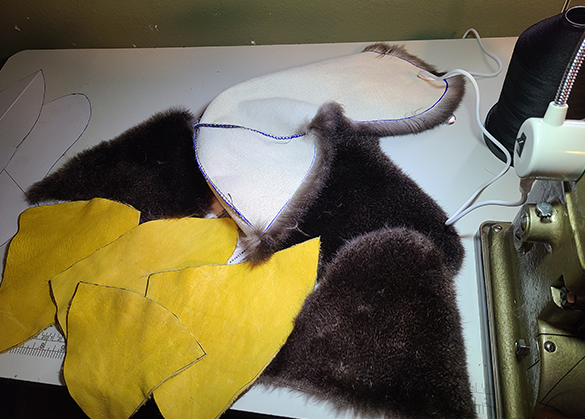
SEA OTTERS HARVESTING
Sea otter harvesting is essential as it is the only guardrail against a population explosion that threatens to devastate the local bounty of shell fish, crab other bottom dwelling sea creatures. The reality of the situation is that the sea otter has the upper hand, so I feel a certain responsibility to protect my homeland waters. Harvesting is the first part of a time sensitive chain of events that have to take place quickly to ensure the best possible product.
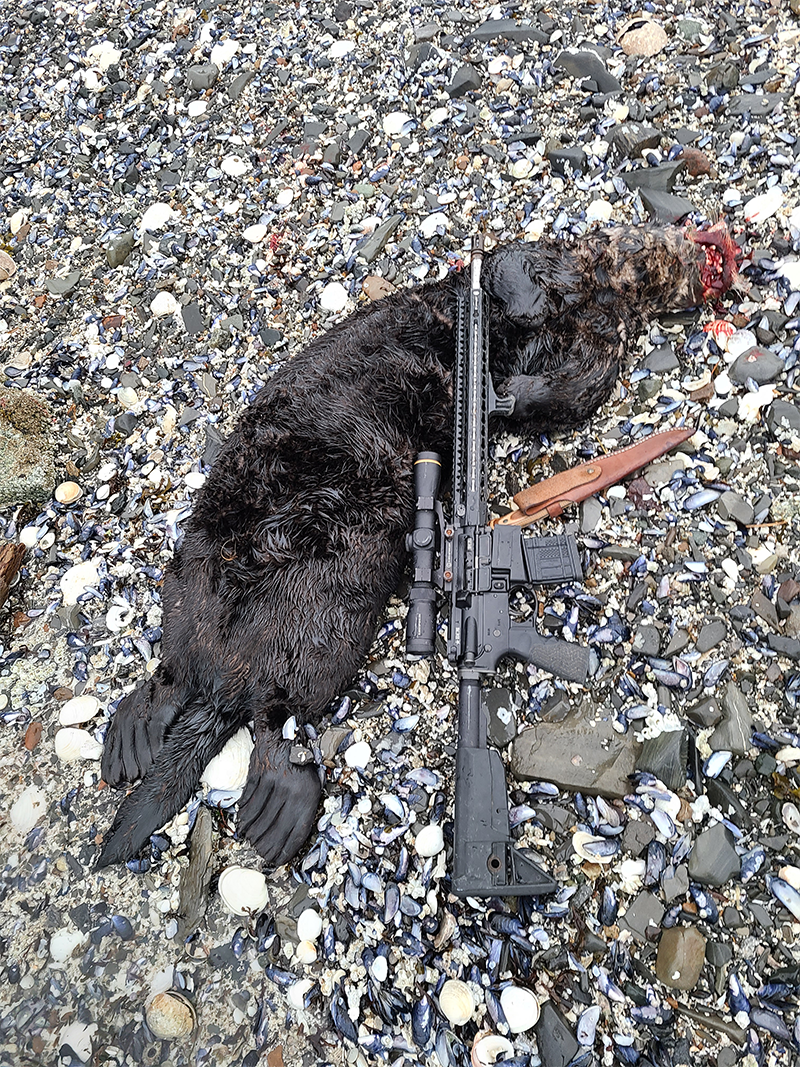
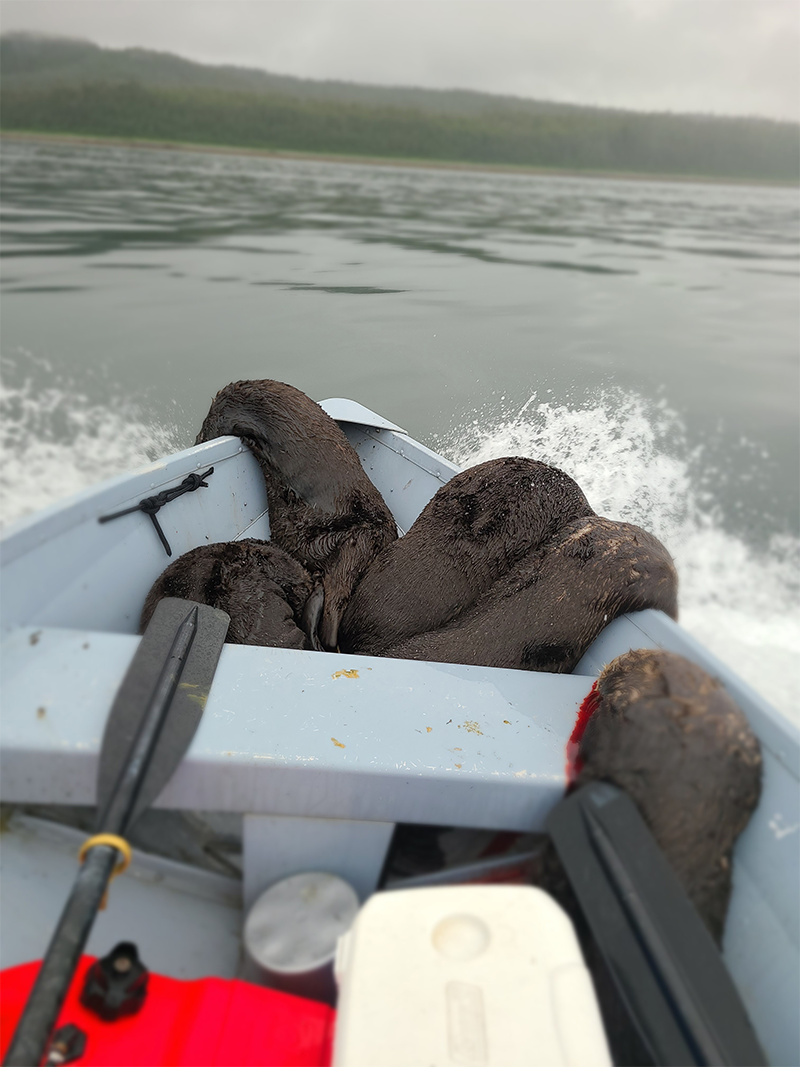
The hunt starts early in the morning with sharp knives, bullets, and ice to cool the skins. A 12 foot open skiff really starts to feel small out in these big waters, so careful planning is always necessary. Even with the best precautions, nature always finds something to throw at you in this country. On a rare good day, it is possible to take an otter from the boat, but they are very intelligent and don’t wait around to be brought onboard.
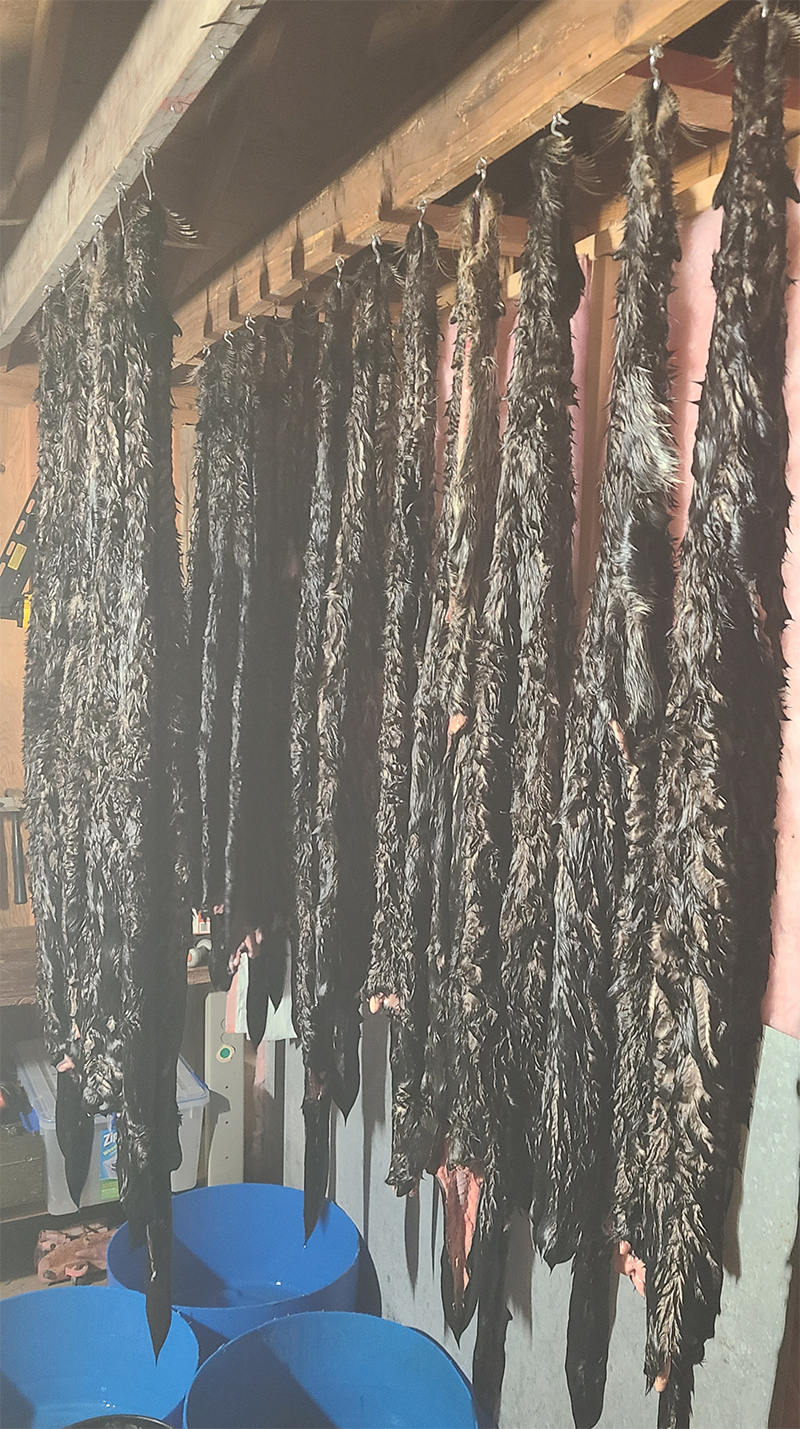
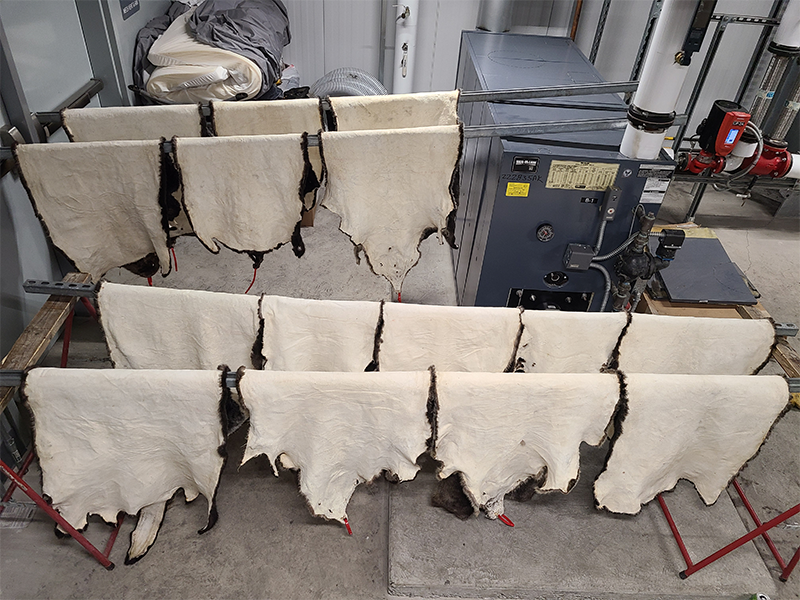
Finding an approachable reef or Rocky point to wait out of sight is usually the best option. In such a small boat, skinning immediately is the rule. This also gets this heat trapping hides ice quickly. As much as I like to stay out and enjoy a day on the water, I feel it is necessary to complete my process by days end. Once trailering the skiff, it’s time for the real work to start. I use a pressure washer to flesh each hide to remove all fat and flesh. It is the very definition of a dirty job. Once a thorough fleshing is complete, it’s on to the first salting. I use a dog grooming air dryer to blow the hair dry then coat the skin side with fine salt, and work it in by hand. After folding it lengthwise skin to skin, I roll it up and set it on a rack to let the salt draw out impurities so they can drip out below. It’s amazing how much junk can be pulled out of an otherwise clean looking animal hide. The next day, first salt is knocked out of the hide, then it’s back to the hair dryer and a second layer of salt with the hide laid out flat skin side up. After a day or two of this, the hides are hung in a room with fans blowing and a dehumidifier to control moisture. In seven to ten days, the hides have turned completely white, signaling 100% dryness. The tanning process picks up where salting leaves off, but a proper salt brings the decomposition of a hide to nearly a halt. This affords peace of mind that every effort is made to ensure a tanned hide of the highest quality. Not lost in the process is the contact of a federal tagging agent to tag and provide a certificate of date, location of kill, and sex of the animal.